Can You Use Liberating Structures In Small Groups?
My experiences from using Liberating Structures with just six participants.
I've facilitated Liberating Structures workshops with 100+ participants. Though it sometimes felt a bit overwhelming, it was cool to see how LS helps you get the most out of collective intelligence!
Liberating Structures are often seen as techniques particularly suited for larger groups. They let everyone participate, give every voice a chance to be heard, and avoid the usual pattern where a handful of people dominate the conversation. Even with dozens of participants, they can still support meaningful conversations.
But does that mean they're less useful for smaller groups?
In short: nope!
This week I facilitated an LS workshop at the Dutch Ministry of Defense with *only* 6 participants. And from the initial program I had in mind, I only had to scratch 25/10 Crowd Sourcing and Mad Tea. Everything else worked out just fine.
It even had a few advantages:
👉 We had enough time for everyone to share their thoughts during the 'All' step
👉 I remembered everyone's name after the first exercise!
👉 I could host a Conversation Cafe myself
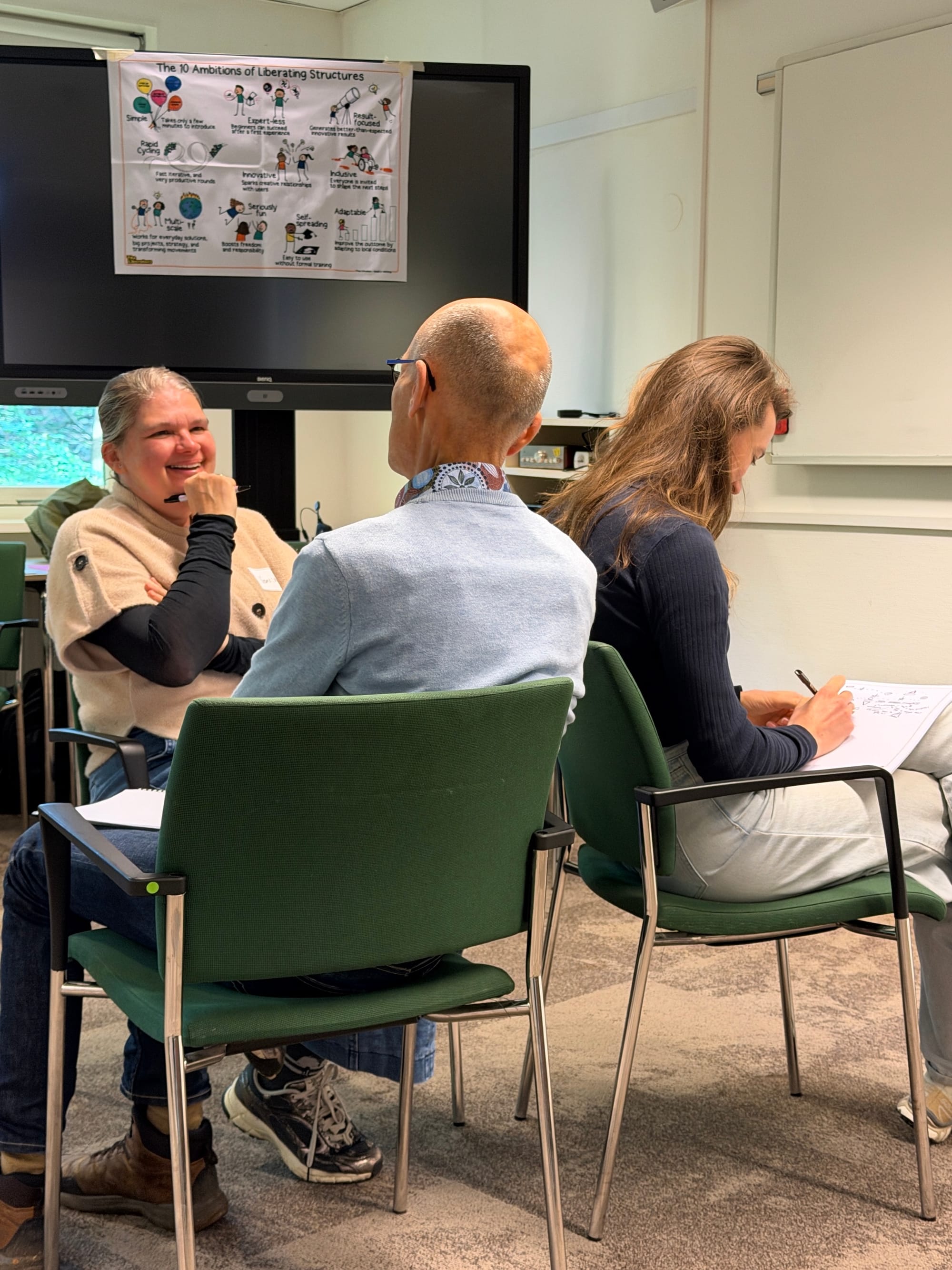
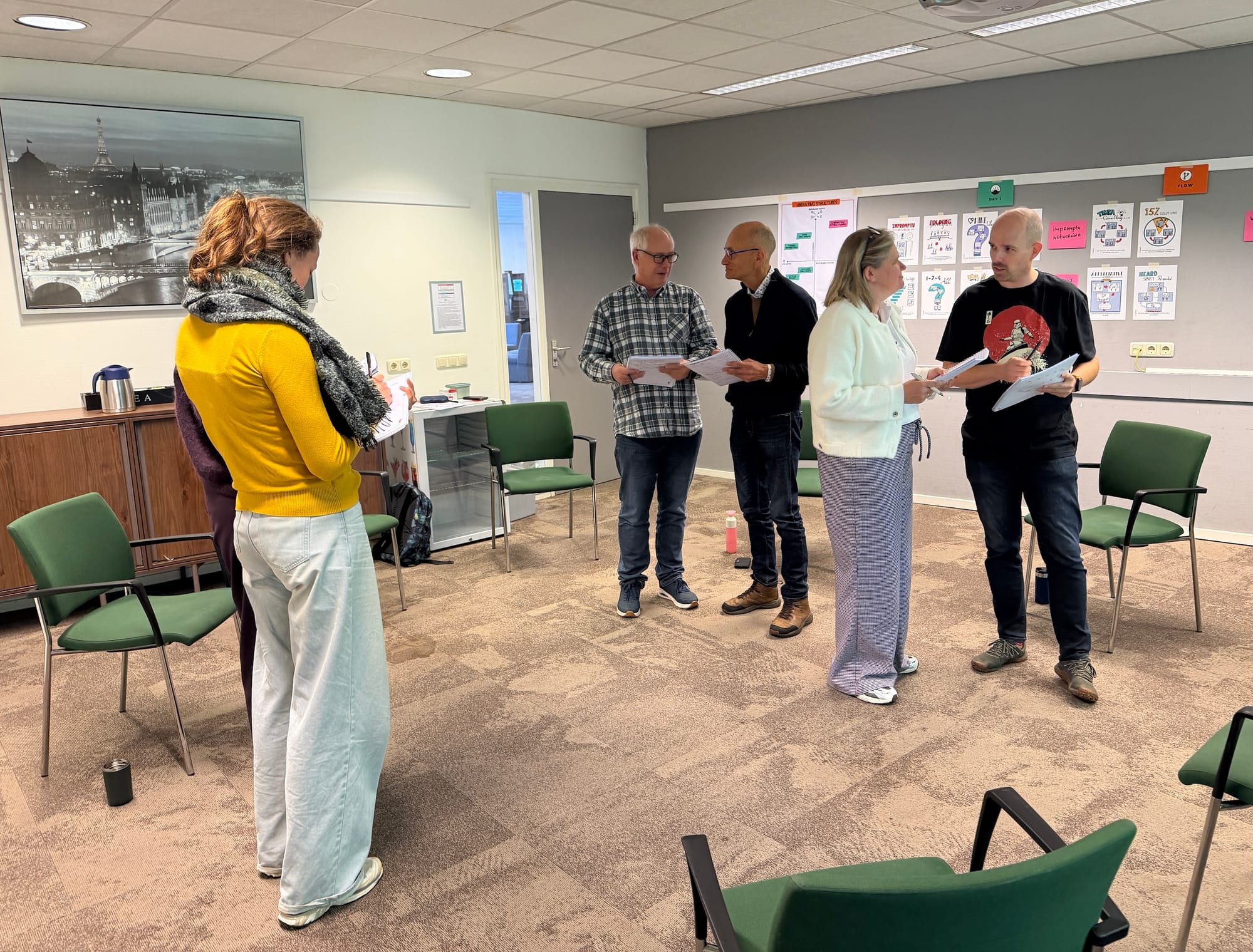
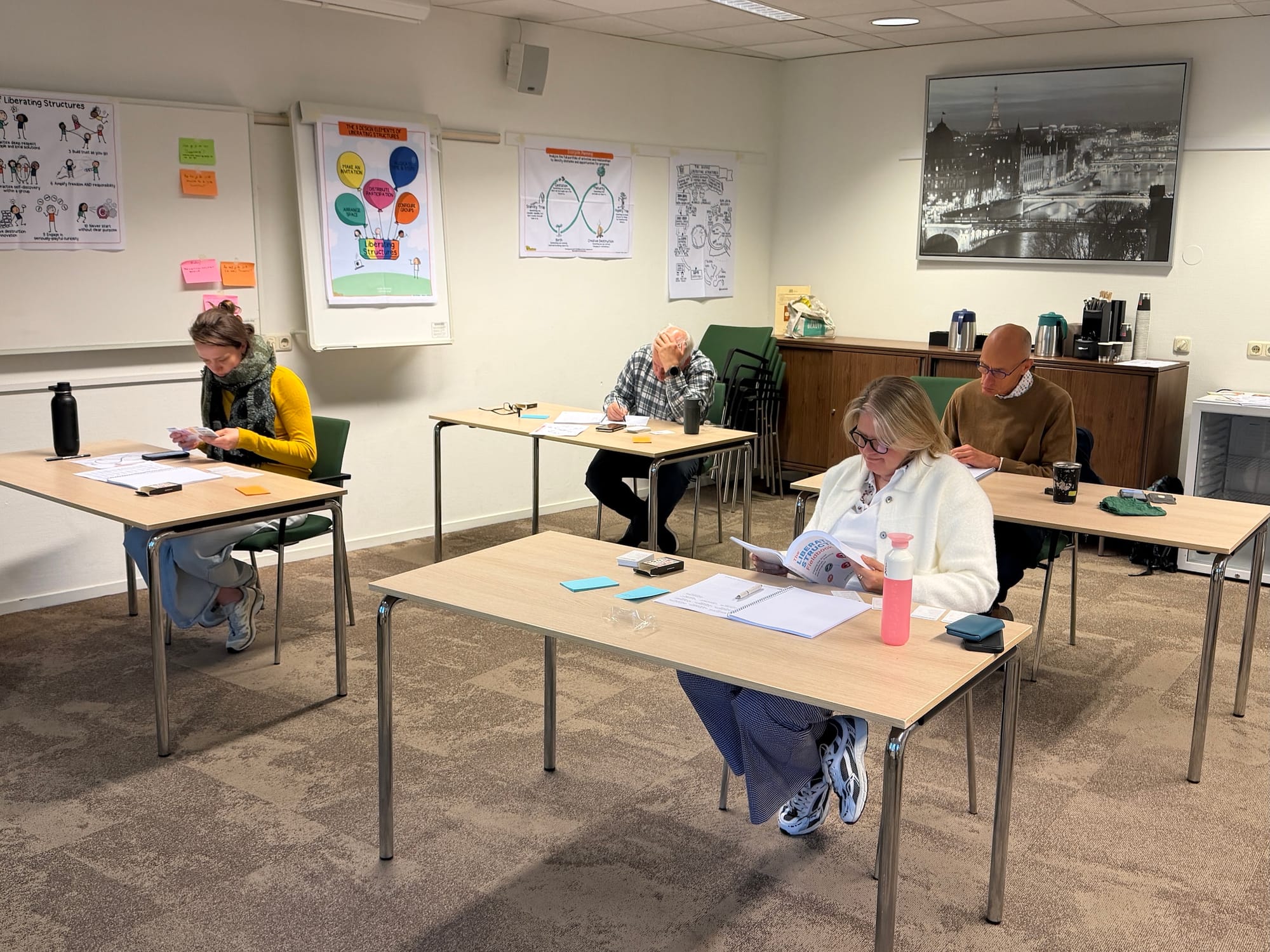
Some photos of the LS-workshop I facilitated at the Ministry of Defense.
Despite these small advantages, my biggest takeaway is that facilitating Liberating Structures with a small group isn't all that different from working with a larger one. After all, the things we often associate with smaller groups, like deeper conversations, flexibility, and opportunities to practice and receive feedback, are just as possible with larger groups.
That's part of the beauty of Liberating Structures:
✅ The same principles work, regardless of group size!
I would even argue that time flies by faster with a smaller group! You naturally get drawn into more personal conversations yourself, making it even easier to lose track of time.
And how do you facilitate 1-2-4-All with six people? 🤔
You could turn it into 1-3-All, but I prefer keeping the original structure: two pairs form a group of four, while the remaining pair explores their ideas more deeply. If you repeat the structure, simply rotate who stays in pairs so everyone gets different perspectives.
And actually, the smallest 'group' I use Liberating Structures with is just myself! Many structures are also incredibly useful for personal reflection.
So, what's the smallest group you've used Liberating Structures with?
What worked (or didn't work) for you?